
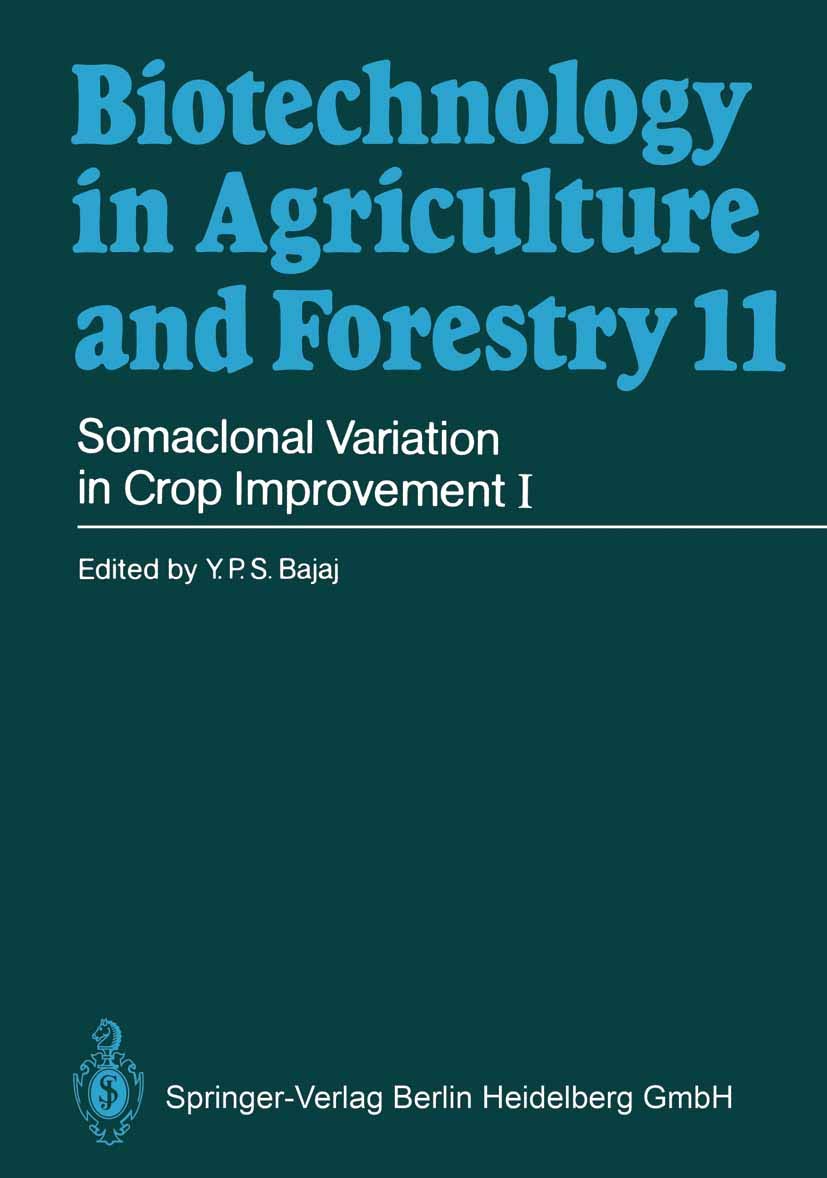
Somaclonal Variation in Crop Improvement I (Biotechnology in Agriculture and Forestry Book 11)
Product details
| Management number | 233412026 | Release Date | 2026/06/27 | List Price | US$65.93 | Model Number | 233412026 | ||
|---|---|---|---|---|---|---|---|---|---|
| Category | |||||||||
Genetic erosions in plant cell cultures, especially in chromosome number and ploidy level, have now been known for over 25 years. Until the mid -1970ssuch changes were consideredundesirable and thereforediscarded because the main emphasis wason clonal propagation and genetic stability of cultures. However, since the publication on somaclonal variation by Larkin and Scowcroft (1981) there has been a renewed interest to utilize these in vitro obtained variations for crop improvement. Studies conduc- ted during the last decade have shown that callus cultures, especially on peridical subculturing over an extended period of time, undergo morpho- logical and genetic changes, i. e. polyploidy, aneuploidy, chromosome breakage, deletions, translocations, gene amplification, inversions, muta- tions, etc. In addition, there are changes at the molecular and biochemical levelsincluding changes in the DNA, enzymes, proteins, etc. Suchchanges are now intentionally induced, and useful variants are selected. For instance in agricultural crops such as potato, tomato, tobacco, maize, rice and sugarcane, plants showing tolerance to a number of diseases, viruses, herbicides and salinity, have been isolated in cell cultures. Likewise induction of male sterility in rice, and wheat showing various levels of fer- tility and gliadin, have been developed in vitro. These academic excercises open new avenues for plant breeders and pathologists. Another area of tremendous commercial importance in the pharmaceuti- cal industry is the selection of cell lines showing high levels of medicinal and industrial compounds. Already high shikonin containing somaclones in Lithospermum are being used commercially. Read more
| ASIN | B001B0XZFA |
|---|---|
| XRay | Not Enabled |
| ISBN13 | 978-3662026366 |
| Edition | 1990th |
| Language | English |
| File size | 11.9 MB |
| Page Flip | Not Enabled |
| Publisher | Springer |
| Word Wise | Not Enabled |
| Print length | 704 pages |
| Accessibility | Learn more |
| Publication date | March 14, 2013 |
| Enhanced typesetting | Not Enabled |
Bestseller ranking
Medicine





Customers who viewed this product also viewed
Cell Biology


![International Strabismus Symposium: Giessen, August 1966, held in Connection with the 20th International Congress of Ophthalmology, Munich, August 1966 ... and Related Diagnostic Treatment Regimes [Print Replica] Kindle Edition](https://m.media-amazon.com/images/I/51PVypLcK6L._SL1174_.jpg)

Correction of product information
If you notice any omissions or errors in the product information on this page, please use the correction request form below.
Correction Request Form